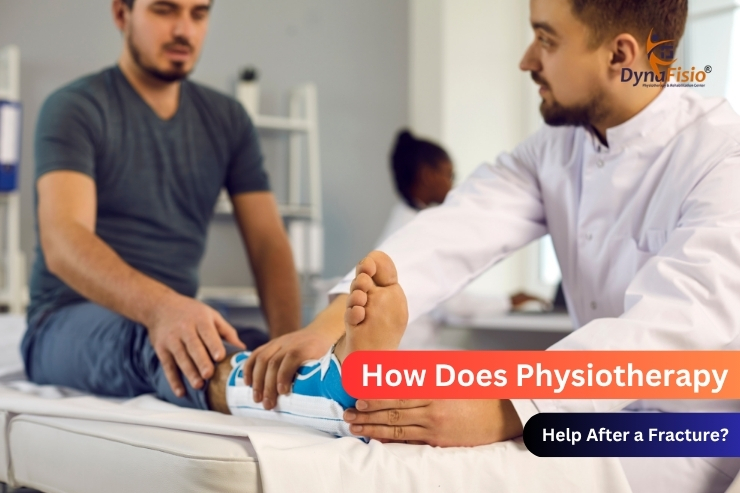
A fracture doesn't affect only the bone. During the healing period, a cast, brace, reduced movement or prolonged rest can also affect the surrounding muscles, joints and overall mobility.
Once the bone has healed enough for rehabilitation, you may notice:
This is where Fracture Physiotherapy can become an important part of recovery.
After being immobilised for several weeks, joints can become stiff. Physiotherapy uses appropriate mobility exercises and, when needed, manual techniques to gradually restore movement.
Muscles around the injured area can become weaker during immobilisation. Progressive strengthening exercises help rebuild muscle function without unnecessarily overloading the healing area.
Depending on the stage of recovery, physiotherapy may include appropriate exercises, positioning, movement and selected treatment techniques to help manage residual pain and swelling.
After a leg, ankle, knee or hip-area fracture, some patients develop changes in their walking pattern. Physiotherapy can help retrain walking, balance and lower-limb control.
The ultimate goal of fracture rehabilitation is not simply movement at the injured joint. It is to help you safely return to everyday activities, work, exercise or sports according to your recovery.
The right time depends on the type and location of the fracture, treatment received and stage of bone healing.
Some rehabilitation may begin while the fracture is still healing, while other exercises must wait until the doctor confirms that the bone can tolerate greater movement or loading.
Therefore, patients should follow their orthopaedic doctor's and physiotherapist's recommendations rather than starting exercises on their own.
There is no fixed recovery period. Rehabilitation depends on factors such as:
The rehabilitation programme should progress according to healing and functional improvement.
If you are looking for Fracture Physiotherapy in Gurgaon, Dyna Fisio provides personalised rehabilitation under the guidance of Dr. Jyoti Arya and her physiotherapy team.
Treatment is planned according to the patient's fracture, current stage of healing, mobility, strength and recovery goals. The focus is on helping patients gradually regain movement, strength and confidence while returning to normal activities safely.
For patients searching for the Best Physiotherapist in Gurgaon, choosing a rehabilitation programme based on proper assessment and progressive recovery is especially important after a fracture.
Physiotherapy can be particularly useful when a patient develops stiffness, weakness, reduced mobility or difficulty performing normal activities after a fracture.
Not always. The appropriate timing and intensity depend on fracture healing and medical clearance. Your physiotherapist should assess the area before progressing exercises.
Yes. Appropriate mobility exercises and progressive rehabilitation can help restore movement when stiffness develops following immobilisation.
Some discomfort may occur when movement is gradually restored, but rehabilitation should be controlled and appropriate for the stage of healing. Severe or worsening pain should not be ignored.
Healing of the bone is only one part of fracture recovery. Restoring movement, muscle strength, balance and normal function is equally important.
With appropriate Fracture Physiotherapy in Gurgaon, patients can gradually work toward returning to their everyday activities. At Dyna Fisio, Dr. Jyoti Arya and her team provide individualised physiotherapy programmes based on each patient's stage of recovery.